This publication is hosted on resources provided by the College of Humanities and Social Sciences IT department at NC State University.
東京大空襲 B 29 無差別爆撃と被害
1 2018-04-23T13:40:19-04:00 CHASS Web Resources 398fc684681798c72f46b5d25a298734565e6eb8 2 2 Moving reel footage of the Great Tokyo Air Raid plain 2018-07-28T19:41:25-04:00 David Fedman 49fb12a9dc049fa723aae9d52d00a1d69c5c61e7This page is referenced by:
-
1
2018-04-23T13:40:18-04:00
A Rain of Ruin
16
The firebombing of Tokyo as seen from the air.
plain
2018-11-28T08:31:56-05:00
1945-03-09
David Fedman
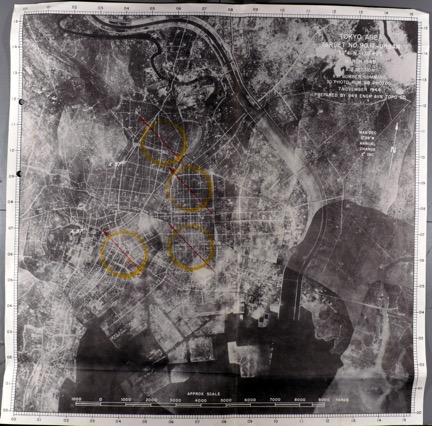
These plans came to fruition on March 9, 1945, when 334 B-29s Superfortresses, each loaded with roughly 5.5 tons of M-69 jellied gasoline cluster bombs, took off from their base in the Marianas headed for Tokyo. Once over the capital, wave after wave of B-29s emptied their incendiary payloads into “Target Zone 1”—an area that corresponds almost perfectly to the flammable, built up regions highlighted in previous planning documents.
The effects were devastating. As planners had hoped and USAAF meteorologists predicted, fires stoked in the initial target zone were swiftly stoked into a great conflagration that enveloped most of Eastern Tokyo. Overnight, much of the low-city was carbonized. Although estimates on the casualties exacted by this raid remain disputed, it can safely be said that 100,000 civilians perished in the flames, while over one million more were left homeless (Selden 2009). Yet what most captivated American eyes was the birds-eye-view of destruction. The toll of this raid and the many to follow in its wake was to be measured in square miles not human lives. It was to be documented, if not celebrated, through aerial photographs that capture the staggering scope of burned out urban fabric (Fedman and Karacas, 2014).