This publication is hosted on resources provided by the College of Humanities and Social Sciences IT department at NC State University.
Delivering the Goods
1 2018-07-28T16:26:32-04:00 David Fedman 49fb12a9dc049fa723aae9d52d00a1d69c5c61e7 2 3 S.J. Ray, "Delivering the Goods," The Kansas City Star, 1942. plain 2018-11-18T16:58:20-05:00 1942 Kansas City Star S.J. Ray Public domain. David Fedman 49fb12a9dc049fa723aae9d52d00a1d69c5c61e7This page is referenced by:
-
1
2018-04-23T13:40:20-04:00
Capital Punishment
15
The burning of Tokyo in American war planning and wartime popular culture.
plain
2018-11-28T08:27:47-05:00
1942
David Fedman
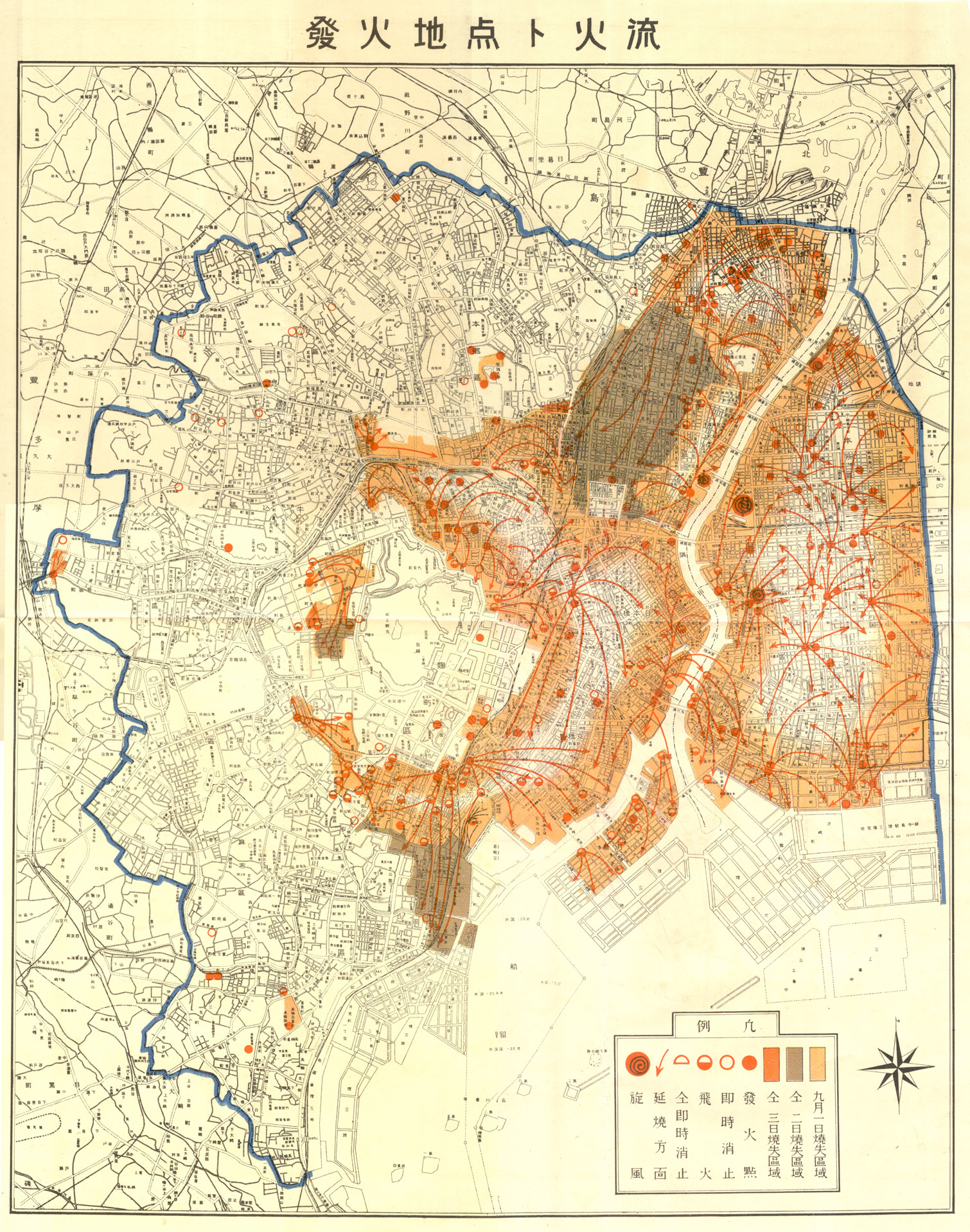
No sooner had the smoke cleared over Pearl Harbor than Americans war planners began to systematically investigate how best to burn Tokyo and its environs to the ground. While some intelligence agencies began to plot out specific sites of industry and defense around the enemy capital for surgical bombardment, others quickly turned their attention to urban Tokyo’s well-known vulnerability to fire. That much of eastern Tokyo had burned to the ground following the Great Kanto Earthquake of 1923 was of great interest to military planners, who began to investigate how they might spark a great conflagration of their own (Fedman and Karacas, 2012).
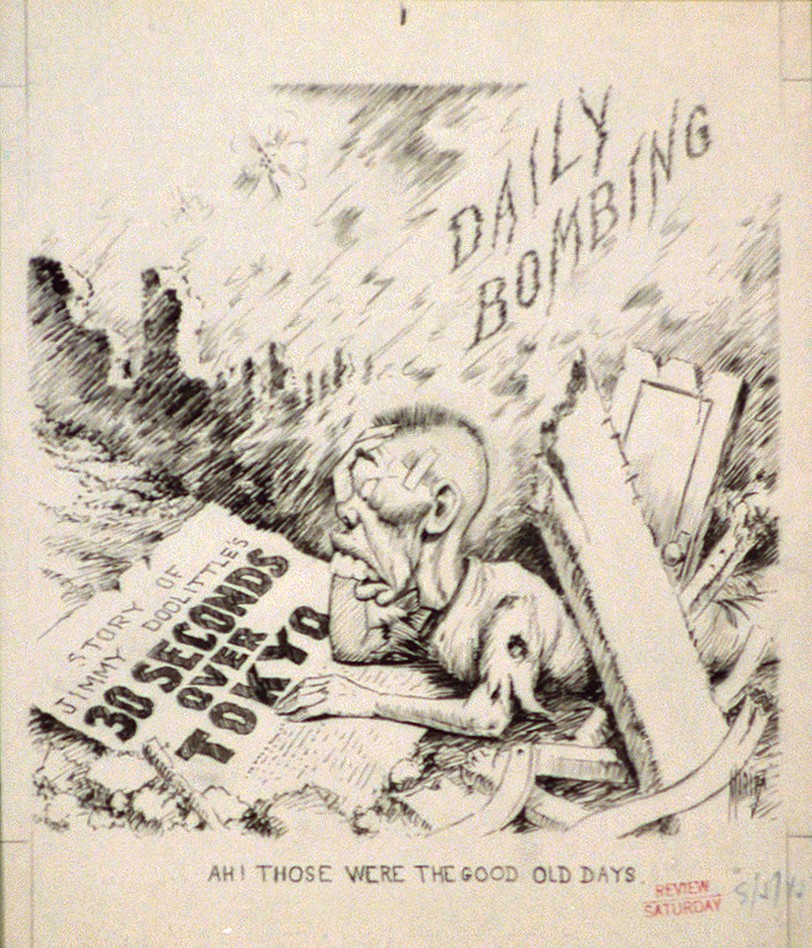
Such an abiding interest in Tokyo’s flammability was far from confined to the war room. Americans of all stripes were soon imagining the capital aflame, especially following news of the Doolittle Raiders' sensational 1942 assault on Tokyo. Perhaps the most popular expression of this sentiment can be found in the chorus of Don Baker’s 1942 hit There’ll be a little Smokio in Tokio:
There'll be a little smokio in Tokio
Hooray, hooray, hooray
And you can bet it will not be from Tokio
Hooray, hooray, hooray
Them saki yaki boy
Will throw away his toys
And Uncle Sam will frown
When Yankee Doodle goes to town