This publication is hosted on resources provided by the College of Humanities and Social Sciences IT department at NC State University.
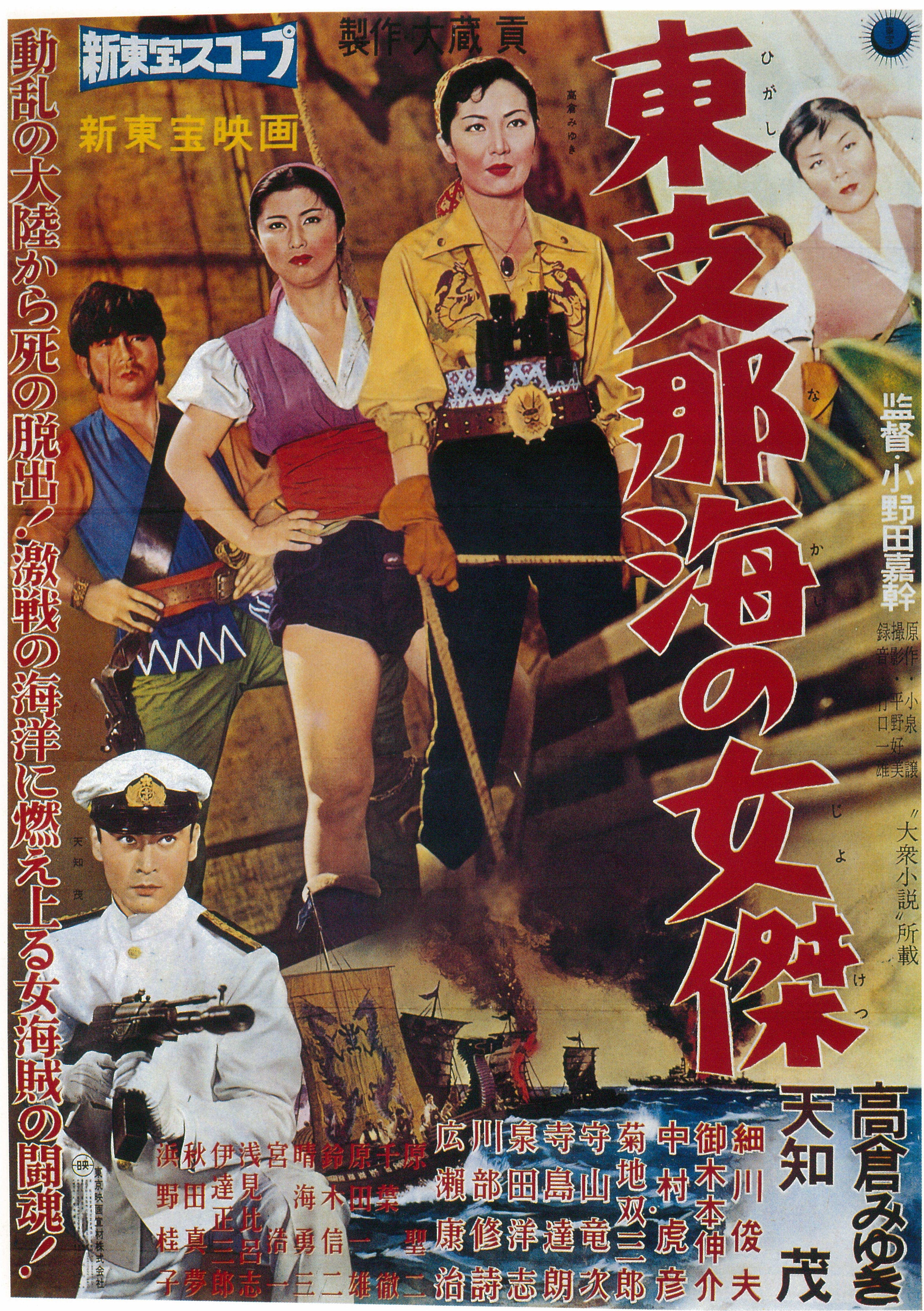
"The Heroine of the East China Sea"
1 2018-07-11T16:30:10-04:00 David Ambaras 1337d6b66b25164b57abc529e56445d238145277 2 10 Poster for Higashi Shinakai no joketsu (The heroine of the East China Sea) (1959, dir. Onoda Yoshiki). Based on the short stories "Minami Shinakai" and "Higashi Shinakai" by Koizumi Yuzuru. (c) Kokusai Hōei/国際放映. plain 2018-11-16T20:36:01-05:00 Kokusai Hōei 1959 Kokusai Hōei/国際放映 Used with permission. David R. Ambaras image/jpeg DRA-0041 Still Image David Ambaras 1337d6b66b25164b57abc529e56445d238145277This page is referenced by:
-
1
2018-04-23T13:40:21-04:00
The transwar romance of "Japan-China goodwill"
11
Ideological representations of a feminine China falling in love with a masculine Japan.
plain
2018-12-05T19:23:48-05:00
David R. Ambaras
In contrast to the inverted gender-national relations depicted in the accounts of abducted women in Fuqing, the wartime imperial state worked to promote a popular cultural image of "Japan-China goodwill" in which a masculine Japan overcame the ill-founded resistance of a feminine China -- often by slapping or otherwise manhandling her -- to realize a true romance between nations and prevent its sabotage by [communists/agents of foreign powers]. The film Shina no yoru (1940) typifies this genre.
These desires for Japanese-Chinese goodwill and romance persisted across the 1945 divide. For example, "The Heroine of the East China Sea" (1959), a swashbuckling adventure about a Japanese naval officer and a Fujianese woman pirate chief who fall in love and escape to Japan in the chaos at the war's end, represented a similar effort to consummate the turbulent relationship on Japanese terms.
Such fantasies faded, however, with the rupture in Sino-Japanese relations and Japan's full integration into the US-dominated Pacific and Cold War regime. The ideational distance between the two countries was reinforced by modernization theory, which celebrated Japan's "successful" non-communist development in contrast to the chaotic failures of China's communist revolution.