Vaccinating the Nishikata Exclave
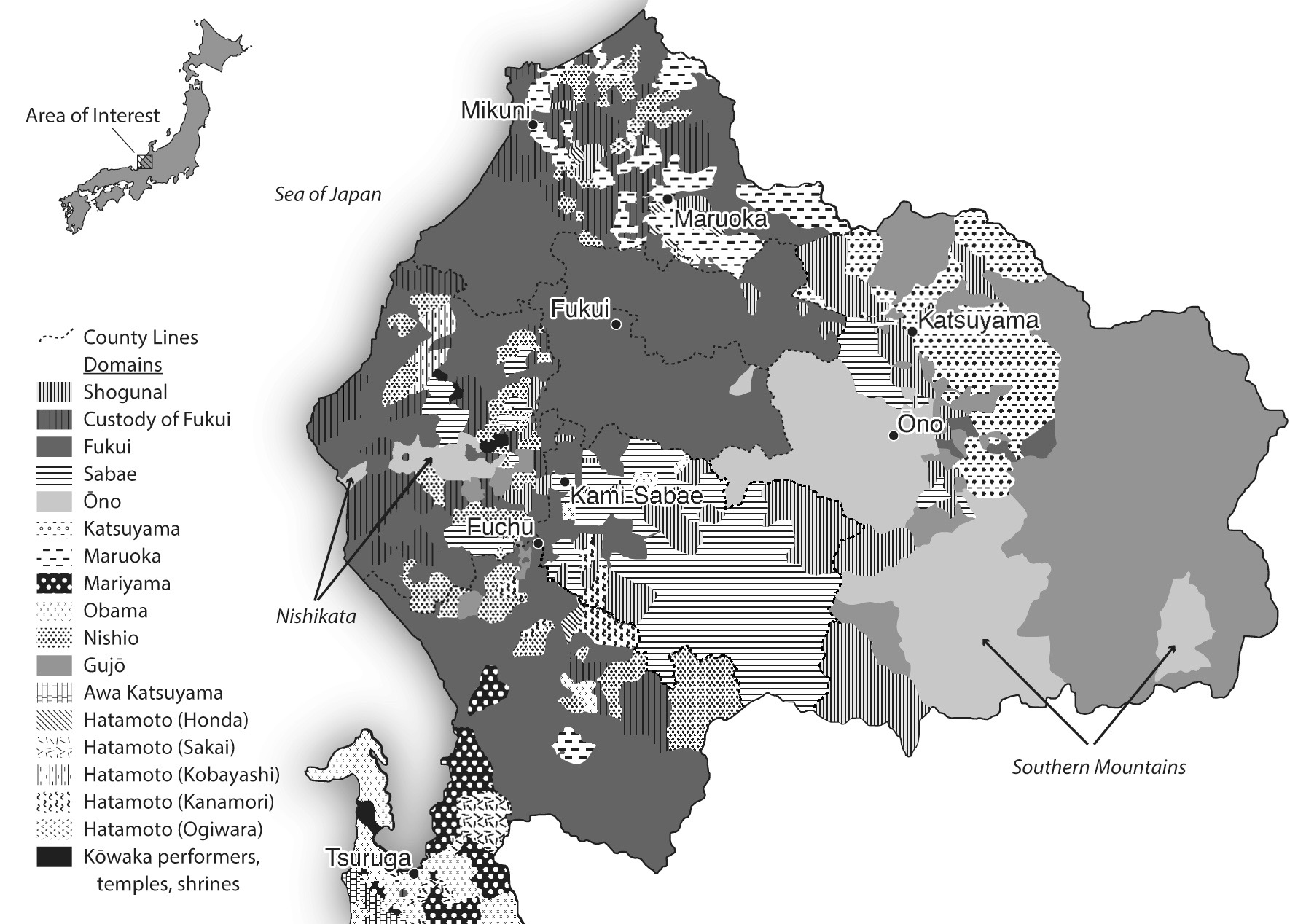
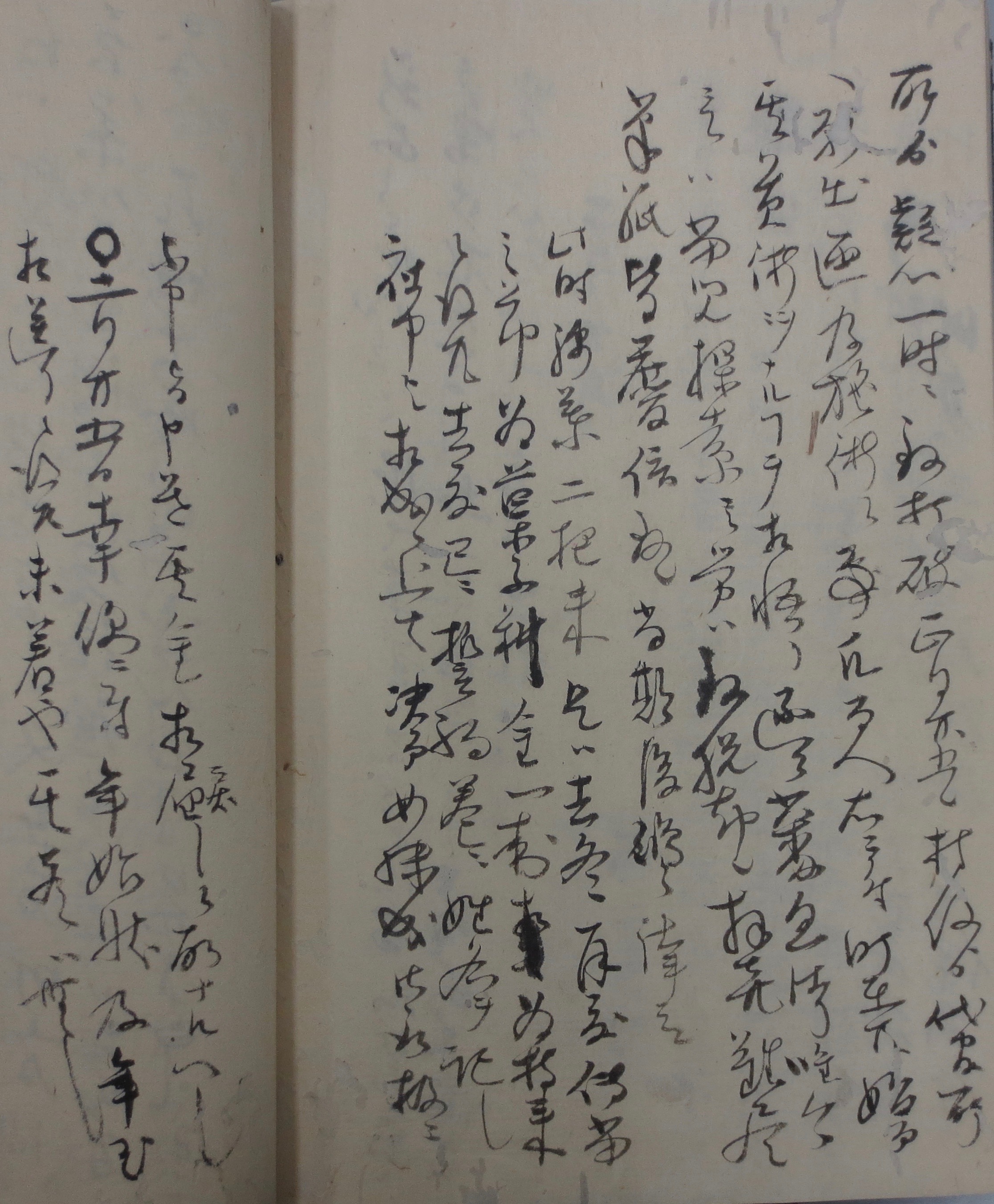
1 media/shugyutosho.background.jpeg media/Ono Domain Territory.png 2019-11-18T17:16:30-05:00 Kate McDonald 306bb1134bc892ab2ada669bed7aecb100ef7d5f 35 33 plain 4925 2021-10-06T11:16:13-04:00 35.984868, 136.487710 Ōno 1850 1853 Maren Ehlers Nakamura Taisuke Hayashi Unkei Kate McDonald 306bb1134bc892ab2ada669bed7aecb100ef7d5f Bodies, Society, and Smallpox Vaccinations in Echizen Province Maren EhlersThe Nishikata exclave of Ōno domain was located in Niu County, about 30 kilometers west of Ōno domain's castle town in the hill country between Echizen’s lowland corridor and the Sea of Japan. Two of its twelve villages bordered directly on the coast. In 1850, Ōno domain established a rural intendant’s (daikan) office in Nishikata because the exclave had become increasingly important for the domain’s responsibilities in coastal defense. The intendant’s office was placed in the fief’s main village—Ota, a rural center of about 1,000 inhabitants. The people of Nishikata had few social ties with fellow subjects in the core part of Ōno's domain territory. Their villages and other kinds of occupation-based status associations were not usually integrated with those in Ōno proper.
It is unclear whether and when Ōno’s vaccinators attempted to bring the vaccine to Nishikata. But their colleagues in the vaccinators’ association of Echizen certainly deemed Ōno's vaccinators responsible for vaccination-related matters within that exclave. Kasahara Ryōsaku had two separate exchanges with Ōno's domain physicians Nakamura Taisuke and Hayashi Unkei that clarified his expectations regarding Nishikata, and his thoughts about the relationship between domain rule and the vaccinators' association more generally. The first of these exchanges dates to 1853.
For background on territorial fragmentation in Echizen province, see The Territoriality of Warrior Rule.
This page has paths:
- 1 media/shugyutosho.background.jpeg 2019-11-18T17:16:25-05:00 Kate McDonald 306bb1134bc892ab2ada669bed7aecb100ef7d5f Vaccine Stories Maren Ehlers 52 plain 4912 2021-10-22T16:14:04-04:00 35.984018, 136.23969 Echizen Province Maren Ehlers Maren Ehlers 18502c6775e5db37b999ee7b08c8c075867ca31d
Contents of this path:
- 1 2019-11-18T17:16:27-05:00 Kate McDonald 306bb1134bc892ab2ada669bed7aecb100ef7d5f Vaccine Theft in 1852/53 48 google_maps 2021-10-30T13:43:07-04:00 1850-1855 Maren Ehlers Kasahara Ryōsaku Naitō Dōitsu Maren Ehlers 18502c6775e5db37b999ee7b08c8c075867ca31d
- 1 2019-11-18T17:16:27-05:00 Kate McDonald 306bb1134bc892ab2ada669bed7aecb100ef7d5f 1857: Reconciling Network and Territory 50 plain 2021-11-04T14:55:07-04:00 1857 Maren Ehlers Hayashi Unkei Kasahara Ryōsaku Maren Ehlers 18502c6775e5db37b999ee7b08c8c075867ca31d
- 1 2019-11-18T17:16:23-05:00 Kate McDonald 306bb1134bc892ab2ada669bed7aecb100ef7d5f A Separate Clinic for Nishikata 47 plain 2021-11-04T15:00:52-04:00 Sabae 35.903320, 136.168458 Fuchū 35.984868, 136.487710 Ōno 35.944509, 136.183610 1857 1871 Maren Ehlers Koyama Yōju Kasahara Ryōsaku Maren Ehlers 18502c6775e5db37b999ee7b08c8c075867ca31d
This page has tags:
- 1 2020-09-11T17:41:12-04:00 Kate McDonald 306bb1134bc892ab2ada669bed7aecb100ef7d5f Status Kate McDonald 1 Third-Level Tag plain 2020-09-11T17:41:12-04:00 Kate McDonald 306bb1134bc892ab2ada669bed7aecb100ef7d5f
This page is referenced by:
-
1
media/DSC_8120.JPG
2019-11-18T17:16:24-05:00
The Mountain Village Effect
80
image_header
2021-10-06T11:06:27-04:00
35.849778, 136.552875
Motodo
07/1850-1853
1883
Maren Ehlers
Kasahara Ryōsaku
Nakamura Taisuke
Hayashi Unkei
It took only a few months—until the 7th month of 1850—for the vaccine to go extinct in Ōno domain. Such interruption was not unusual; almost all entities in Echizen and surroundings that had received a transmission from Kasahara failed to perpetuate it on first attempt [Yanagisawa 2020, p. 54-55]. Ōno’s vaccinators blamed this failure on a lack of volunteers and received a second transmission from Kasahara Ryōsaku in the 11th month [“Shutō shōrei ni tsuki furegaki,” 1851, in Fukui kenshi, Shiryō-hen 7, 458–59]. But suddenly their fortunes turned. In the winter of 1850/51, the “southern mountains” exclave of Ōno domain, 30 km from the castle town, was ravaged by the smallpox virus. This sad event turned into an unexpected boon for Ōno’s vaccinators because it convinced skeptical villagers that the cowpox vaccine was effective at protecting children from smallpox.
In a letter to Kasahara, Ōno's domain physicians Nakamura Taisuke and Hayashi Unkei explained that the disease had spared vaccinated children in the village of Motodo, where they had inoculated “five or seven” children in the summer of 1850 (see the header image for a photo of Motodo's former village site, and the map below for its location). According to the letter, village officials in the affected area had then begun to turn to the rural intendant to request more vaccinations and gathered about a hundred volunteers. The letter stated that townspeople and villagers had finally understood the value of the vaccine, and that “we have now escaped the trouble of searching for children to be vaccinated.” [Letter from Nakamura Taisuke and Hayashi Unkei to Kasahara Ryōsaku, 1851.2.25, in Kasahara, Hakushinki, 144–45] This vaccination boom occurred two years before Fukui domain experienced a similar effect in the winter of 1852/53. It was widely advertised throughout the domain by Ōno's domain government.
What made Motodo such a compelling case? It was located in a remote, thinly populated valley about a day’s journey (30 kilometers) from Ōno's castle town. Did Ōno's vaccinators deliberately select Motodo to take advantage of the villagers' ignorance to turn them into a test case or perhaps to keep the vaccine alive? Or did they try to vaccinate villagers across Ōno's countryside in the summer of 1850? The fact that only a handful children in the area were vaccinated suggests that most parents had remained suspicious at the time. But while the exact circumstances remain uncertain, it is clear that Motodo represented a place on the periphery in the imaginative geography of Tokugawa-style Confucian rule. Much later, in 1883, the domain lord's official chronicler looked back on that era and wrote how remarkable it was that even obstinate and benighted people in such a remote and impoverished area had agreed to receive vaccinations [Ryūin kiji, p. 377]. The trope of the ignorant mountain villager, far removed from civilization, served as the perfect foil for highlighting the lord's benevolence.
The village’s secluded location probably amplified the impact of the 1850/51 smallpox outbreak. It was not uncommon for smallpox to hit different parts of the same region at different points in time. In addition, data from other parts of Japan suggest that remote villages were not visited by the virus as frequently as other communities, but tended to experience higher fatalities when the virus did strike because there were many cohorts of newborns who had failed to build immunity [Jannetta, Epidemics and Mortality in Early Modern Japan, 1987, p. 100-104].
Motodo’s success story does not mean that Ōno’s physicians had solved their transmission problem. In the early 1850s there were only three physicians in the domain who were capable of administering vaccinations, and villages such as Motodo had to have regular access to vaccinate every newborn, either by bringing their children to the castle town or by having vaccinators visit their valley once with carrier children in tow and then a second time after seven days. In the winter, such visits would have been particularly daunting because mountain roads were blocked by heavy snow. Moreover, their optimism in 1851 notwithstanding, Ōno’s vaccinators had not yet convinced the local people of the benefits of their treatment.
Beside the case of Motodo (and the Nishikata exclave), it is unfortunately unknown how and to what extent Ōno's domain government went about vaccinating its rural subjects. People on the Ōno plain might have been asked to visit the clinic in the castle town, but most mountain villagers of the domain would have had to walk for a day or more to reach the clinic.
-
1
media/shugyutosho.background.jpeg
media/DSC_7957.png
2019-12-28T09:53:22-05:00
The Territorial Approach to Vaccinations: Ōno Domain
77
image_header
4925
2021-10-06T11:03:14-04:00
35.984868, 136.487710
Ōno
1842
1858
Maren Ehlers
Doi Toshitada
Ōno's case gives insight into the political motivations of domain rulers for obtaining the smallpox vaccine to strengthen territorial control. By shedding light on vaccinations of marginal kinds of subjects such as mountain villagers and outcastes, Ōno's sources also show how smallpox vaccinations reproduced the imaginative geography and power relations of domain rule. Ōno's lord Toshitada seems to have viewed vaccinations as part of a mercantilist agenda. This meant that he prioritized the fiscal needs of his domain, developed and protected its resources, and tried to minimize imports and maximize export revenue. For this reason, he sought to spread the vaccine primarily within his territory, even as he took advantage of the border-crossing networks of his physicians in obtaining the vaccine. This general mindset was probably shared by many domain rulers, including Fukui's, but Toshitada was particularly involved in promoting vaccinations in his domain.
Toshitada regarded all resources within his territory as a potential source of wealth, and this included the laboring bodies of subjects. In 1842 Toshitada launched a major domain reform with the goal of improving the domain’s budgetary situation. During the Tenpō famine in the 1830s, the domain had lost at least 4,900 lives (out of a population of approximately 29,000), and Toshitada apparently saw vaccinations as a way to boost the economy by increasing the number of working bodies [Fukui kenshi, Tsūshi-hen 4, 496]. One of the earliest domain edicts advertising the benefits of the vaccine began with the statement that in “Holland,” not a single life had been lost to smallpox since the commencement of the vaccinations, and the population was increasing every year. In 1858, the government claimed that in the past seven or eight years the domain population had increased by 2,000 thanks to vaccinations [“Shutō shōrei ni tsuki furegaki,” 1851, in Fukui kenshi, Shiryō-hen 7, 458-459].
For Ōno's lord and his advisers, vaccinations were thus linked to territorial rule. On one hand, domain rule, at least in its mercantilist form, seems to have accelerated the spread of smallpox vaccination among the subjects of Ōno domain, given the strong interest in population growth it inspired among administrators. On the other hand, domain rule also hindered transmission because of the domain territory's lack of coherence. Explore the subject of territorial fragmentation. Or stay on this pathway to explore vaccinations in the main part of Ōno's domain territory, including towards mountain villagers, common townspeople, and outcastes.
-
1
2019-11-18T17:16:23-05:00
A New Regional Network of Vaccinators
58
google_maps
2021-10-06T10:12:06-04:00
1901
1849-1869
Maren Ehlers
Kasahara Ryōsaku
Ogata Kōan
After Kasahara had delivered the vaccine to Fukui and set up his clinic, he immediately offered to share it widely with medical specialists in nearby domain territories. He probably did so for the same reason he had accommodated his colleagues in Osaka: because he hoped to create a reservoir and build a professional vaccinators' network with common goals and standards, one that would share knowledge, suppress competitors, and challenge domain administrators if necessary. Besides, as noted, Kasahara was driven by a strong commitment to eradicate smallpox from the Japanese islands.
Kasahara wanted to ensure that only trained specialists performed vaccinations. He feared that parents would otherwise lose confidence in the treatment and hesitate to grant doctors access to their children's bodies. A few weeks after his return to Fukui, on 1/17, 1850 (lunar calendar), he wrote to specialists of Dutch medicine in towns and territories in the surrounding Hokuriku region with an offer to share the vaccine. Physicians from Fuchū (a subfief of Fukui domain) were the first to receive a transmission. In subsequent weeks, colleagues from Toyama (Toyama, a branch domain of Kaga), Kanazawa (Kaga domain), Tsuruga (Obama domain), Sabae (Sabae domain), Ōno (Ōno domain), Daishōji (a branch domain of Kaga), Maruoka (Maruoka domain), Kanazu (Fukui domain), and Katsuyama (Katsuyama domain) either brought children to Fukui or received visits of children from Fukui, whose bodies were to serve as vehicles for the vaccine (click on the pins on the map to locate these places). Before vaccination, these physicians had to receive instructions and sign an oath at the domain office that they would observe all technical requirements and not prioritize personal gain.
The newly minted vaccinators joined the vaccinators' society (sha) and set up chapters (so-called shachū) in their respective towns and territories. Initially, each chapter had only a handful of members, but together, they formed a professional organization that transcended domain borders and was capable of providing retransmissions. Other functions of the organization included the sharing of information and suppression of uncontrolled transmissions. A semi-autonomous, self-regulating network of medical professionals was thus taking shape with only minor support from domain governments. At the same time, effective collaboration with domain leaders was one of the network's most important functions.
Ogata Kōan's network in Osaka
In Osaka, Ogata Kōan, the head of the local vaccination clinic who had received a transmission from Kasahara in 1849, kept a similar record of physicians with whom he had shared the smallpox vaccine, continuing up until 1869. His list included 168 transmissions, mostly to physicians in Osaka and surrounding provinces, but some as far away as Edo and Nagasaki. On one occasion (1851), Ogata transmitted vaccines to the Hokuriku region—to Ōno domain, where vassals enjoyed close ties to Ogata's academy of Western Learning [Osaka no jotōkan]. This case illustrates the openness of the vaccinators' network and its many overlaps with the network between scholars of Dutch=Western Learning.
For a translation of the vaccinators' oath, move on to the next station on this pathway. Or explore how the network mediated relations between vaccinators of different domains.
-
1
2019-11-18T17:16:29-05:00
Financing the Village Relay
54
plain
4248
2021-10-06T10:49:04-04:00
36.039075, 136.013335
Gamō
36.04297, 136.21834
Fukui
1860
Maren Ehlers
Kasahara Ryōsaku
We do not know how long this second attempt at village relay lasted and how the program fared in later years. Records on it end with the final, ninth volume of Kasahara Ryōsaku's “Vaccine Travel Record.” There is a strong possibility that the village relay method was not continued, most likely because of a lack of funding from the domain. Despite Kasahara’s efforts at cost-cutting, village relay required a massive investment of money and personnel. The five visits to Gamō, for example, cost 1,293 monme of silver, only 612 monme of which were covered by donations. To make up for the difference, Kasahara and district governor Okada both contributed some of their own money and had some of the loss reimbursed by the district office. Without regular funding from the domain, the expeditions would have been unsustainable.
When the district governor reassessed the financial situation after the first visit to the coast, it turned out that only 60 out of 211 recipients of vaccinations in Gamō had donated the suggested amount of 10 monme of silver. The governor believed that in order to continue, he needed to put more pressure on potential donors. When the vaccination clinic thus sent out its next call for villages to apply, the text no longer explicitly mentioned the possibility of poor parents being exempted from donations.
Donation rates were much higher during the second tour to Koniu, probably because the district office had applied more pressure on villagers. But Kasahara was taken aback by the district officials’ strictness. He had been notified of a rumor that he was enriching himself by collecting 10 to 20 monme per vaccination, and he did not want to add any more fodder to such talk that could have endangered the success of the program. At the bottom of the rumors about profiteering lay an unresolved question. Rural vaccinations required organizational capacities and pressure of the kind that only a government could provide, yet the domain government was not able or willing to fully fund the program, causing confusion among subjects about its public character. A much larger investment in public health was necessary to obtain the doctors, transportation, and bureaucracy needed to immunize every child in the domain.
However, there are indications that the clinic in Fukui later transmitted vaccines and knowledge to rural physicians. The very last entry in the “Vaccine Travel Record” notes a letter from 1860 by Fujii Shinsai, a physician in the coastal village of Umeura who was Training rural vaccinators was a promising method and also practiced in some other Japanese domains such as Chōshū. It also seems to have been an acceptable solution in Kasahara's eyes, provided that physicians in question received official permission to handle vaccinations.
But not all rural physicians bothered to obtain such permission. Learn more about a case of illegitimate transmission. Or stay on this pathway to learn about an alternative to village relay in another Echizen domain—Sabae.
-
1
media/Map2 Echizen.jpg
2019-11-18T17:16:24-05:00
Introducing the Vaccine to Ōno Domain
53
plain
4276
2021-10-06T10:16:12-04:00
1845
1849-1851
Maren Ehlers
Tsuchida Ryūwan
Hayashi Unkei
Ogata Kōan
Kō Ryōsai
Nakamura Taisuke
Kasahara Ryōsaku
The transmission to Ōno domain is a typical example of vaccine sharing between domains in Echizen province. But whereas in Fukui domain the initiative for importing the vaccine came from a town doctor, the lord of Ōno himself actively promoted Dutch Learning and used domain doctors to bring the treatment to his domain. In this case, the interests of domain physicians and their network fell in line with the designs of their domain lord.
The two leaders of Ōno's vaccination program, Tsuchida Ryūwan and Hayashi Unkei, were both domain physicians in direct service of the lord. The lord had sent them to Osaka in 1845 to study with two prestigious scholars of Dutch medicine, Ogata Kōan and Kō Ryōsai. Unlike Fukui's ruler, Ōno's lord Doi Toshitada had a sustained interest in Dutch Learning. Whenever he was in Edo on tours of duty for the shogunate, he occasionally invited prominent scholars such as Sugita Seikei, Koseki San’ei, and Takami Senseki to his mansion for personal lectures. Toshitada also encouraged Dutch Learning among his vassals and personal physicians. Besides, he probably had a strong personal motive for bringing the smallpox vaccine to Ōno. In the spring of 1849, smallpox claimed the life of his infant son and heir, shortly before the vaccine reached Japan’s shores. Though neither Tsuchida Ryūwan nor Hayashi Unkei had studied with Kasahara Ryōsaku, their training in Osaka imbedded them in the same scholarly lineages as Kasahara and Kasahara's teacher Hino Teisai.
News of the vaccine's importation quickly reached Toshitada. In the 10th month of 1849, before the vaccine had even arrived in Fukui, he entrusted Tsuchida Ryūwan with some funds from his private purse to bring the vaccine to Ōno [source]. Early in 1850, domain physician Hayashi Unkei as well as town doctor Nakamura Taisuke went to Fukui to formally ask Kasahara Ryōsaku for a transmission. Like all the other physicians who received transmissions from Kasahara, the two men had to sign the vaccinators’ oath. This copy of the oath shows both men’s signatures under the date of 2/14.
While in Fukui, Hayashi Unkei and Nakamura Taisuke vaccinated the “small child of a tobacco dealer” and brought the toddler back to Ōno. After seven days they transferred the lymph to three more children, and from there to another three and so on to build the foundation for a self-sustaining program [Hakushinki, letter from Nakamura Taisuke and Hayashi Unkei to Kasahara Ryōsaku, 1850, 4/1, p. 106].
In the following years, Ōno's vaccinators benefited from their participation in Kasahara's regional network of vaccinators in Echizen province and beyond. But they also maintained their connections to physicians of Dutch Learning in other places. According to Ogata Kōan's records, Ōno's physicians seem to have received a retransmission from Kōan's clinic in Osaka in 1851 [Osaka no jotōkan].
Explore vaccinations in Ōno domain through The Territorial Approach to Vaccinations: Ōno Domain or Vaccinating the Nishikata Exclave. Or, use the link below to return to “Vaccine Stories.”
-
1
media/shugyutosho.background.jpeg
2019-11-18T17:16:25-05:00
Vaccine Stories
52
plain
4912
2021-10-22T16:14:04-04:00
35.984018, 136.23969
Echizen Province
Maren Ehlers
This section contains six pathways about the introduction of the smallpox vaccine to Echizen province. Each pathway tells a different story about this process, but all six are interconnected and the reader is encouraged to move between them and discover shared themes, links, and intersections.
The Vaccination Clinic in Fukui and Chains of Bodies focus on Fukui domain. The Territorial Approach to Vaccinations focuses on Ōno domain.
Long-Distance Transmission, The Sharing of Vaccines, and Vaccinating the Nishikata Exclave highlight contacts, collaborations, and vaccine-sharing between vaccinators and officials in Fukui, Ōno, and other parts of the country.
-
1
2019-11-18T17:16:26-05:00
The "Vaccine Travel Record"
38
plain
2021-10-05T17:25:20-04:00
35.984018, 136.23969
Echizen Province
35.0000, 135.7500
Kyōto
1849-1860
Maren Ehlers
Kasahara Hakuō
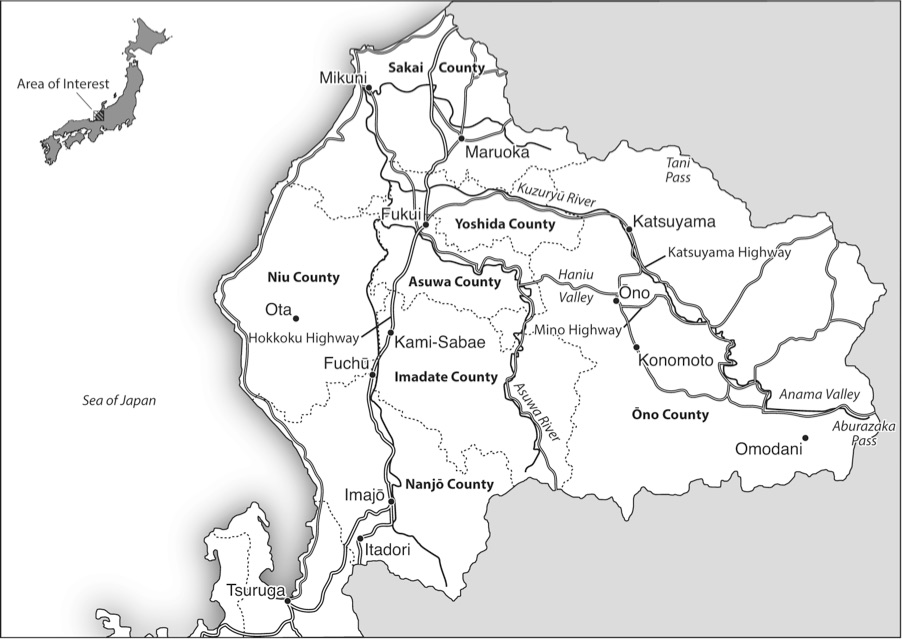
The most important primary source for this module is the “Vaccine Travel Record” (Hakushin-yō ōraidome). Kasahara Ryōsaku, a town doctor and pioneering vaccinator from Fukui town, recorded nine volumes (the first of them is missing) between 1849 and 1858, with one final entry from 1860. He used this record to take notes as well as copy correspondences and documents about retransmissions, rules, procedures, and other matters regarding the movement of the vaccine to and from Echizen and within the province.
Another vaccine-related record (Senkyōroku) in Kasahara Ryōsaku's archive describes Kasahara's trip to Kyoto and back to Fukui to carry the vaccine to Echizen in 1849. Only volume 5 of this record has survived.
In this module, the pages related to Ōno domain are based on new research on the “Vaccine Travel Record” and other primary sources. Pages about Fukui and Sabae domain draw on research by Yanagisawa Fumiko, Ban Isoshirō, Umihara Ryō, and other scholars, who have likewise made use of the “Vaccine Travel Record.” The record has been published as Hakushinki: Hakushin yō oraidome (Fukui: Fukui-ken Ishikai, 1997).
Use the Territorial Approach to Vaccinations or the Vaccinating the Nishikata Enclave pathways to explore new research on Ōno domain that draws on the “Vaccine Travel Record.” Or use the link below to continue on the pathway “Written Records” to read more about the vaccinators' oath and other important records facilitating the vaccination process.



.jpg)

.jpg)
This page references:
- 1 2019-11-18T17:16:26-05:00 The Territoriality of Warrior Rule 25 plain 2021-10-22T15:43:25-04:00 35.984018, 136.23969 Echizen Province 1770 1850 Maren Ehlers
- 1 media/Ono Domain Territory_thumb.png 2020-01-09T19:05:41-05:00 The Nishikata Exclave 11 Ōno's domain territory within Echizen province, with the Nishikata exclave in the West. Hover over the image for annotations. media/Ono Domain Territory.png plain 2020-12-20T18:37:04-05:00 Maren Ehlers, “Ōno-han no Koshirō – han shakai no naka no hinin shūdan, ” in Toshi no shūen ni ikiru, ed. Tsukada Takashi, 87-120 (Tokyo: Yoshikawa Kōbunkan, 2006). Maren Ehlers ME-0011